
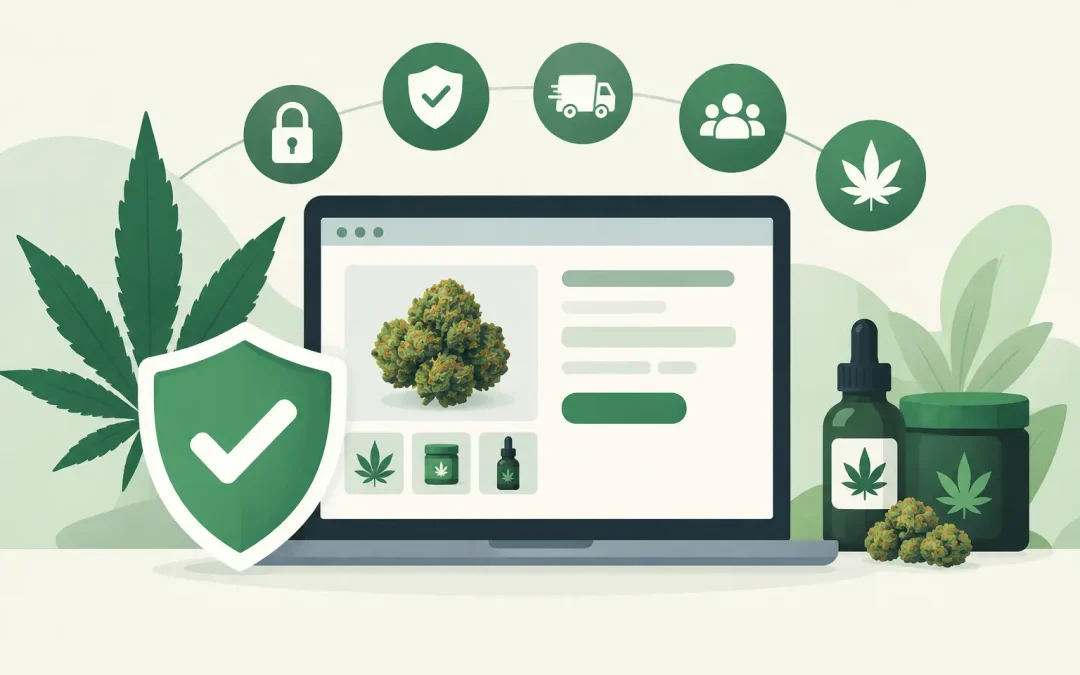
A shopper lands on your cannabis website, sees a product they want, and pauses at checkout. They are not only deciding whether they want the item. They are deciding whether your business is legitimate, whether their information is protected, and whether you will still answer the phone after payment clears. The top cannabis site trust signals answer those questions before doubt turns into a lost sale.
For cannabis, CBD, seed, medical marijuana, and mushroom-focused businesses, that confidence is especially valuable. Your customers know this is a specialized market. They may have seen sites disappear, payment options change, or sellers make claims they cannot support. A professional website gives them a reason to stay – and a reason to come back.
Why Trust Carries More Weight in Cannabis Ecommerce
Trust matters in every online store, but cannabis-related websites face an extra layer of scrutiny. Visitors may be concerned about state rules, product quality, age requirements, privacy, shipping limitations, and whether a business is actually operating in the United States. Even a great product catalog cannot overcome a website that feels unfinished, vague, or unsafe.
That does not mean every cannabis website needs enterprise-level features on day one. It means the basics must be handled well. Clear business details, secure checkout, accurate policies, dependable site performance, and responsive support are often more persuasive than flashy design.
The goal is not to make your site look like a giant corporation. Small businesses can build real credibility by being specific, consistent, and easy to reach.
Top Cannabis Site Trust Signals Customers Look For
A secure, professional website experience
A valid SSL certificate is one of the first signals visitors recognize, even if they do not know the technical term. The browser lock icon and HTTPS connection tell customers that information submitted through your forms and checkout is encrypted. Without it, browsers may show a warning that immediately damages confidence.
Security also has to work behind the scenes. Regular backups, malware monitoring, software updates, secure passwords, and a properly maintained WordPress installation reduce the risk of a compromised site. If your store is down, defaced, or redirecting visitors to a suspicious page, trust disappears fast.
Reliable hosting plays a practical role here. Fast SSD-based infrastructure, current PHP versions, account isolation, and automated backups are not just technical specifications. They help keep your business available, secure, and easier to restore when something goes wrong.
Clear contact information and real support
A cannabis website should make it easy for customers to verify that a real business stands behind it. Display a business email address, a working phone number, and a contact page that explains how and when customers can reach you. If you have a physical business location, include it where appropriate.
Avoid hiding behind a contact form alone. A form is useful, but a phone number and direct email address show accountability. If you offer support hours, publish them. If response times vary, set honest expectations rather than promising an answer in minutes when that is not realistic.
For newer brands, a clear founder or team page can also help. A short explanation of who runs the company, what you sell, and why you serve this market is more credible than anonymous marketing copy. Keep it professional and factual.
Straightforward policies that customers can find
Your shipping, returns, privacy, terms, and age-related policies should not be buried in tiny footer text or written in language nobody can understand. Customers want to know what happens after they place an order, especially when products may be subject to location-based restrictions.
Be precise about where you ship, how long fulfillment normally takes, which products have special limitations, and what a customer should do if an order arrives damaged or incomplete. Do not make broad promises you cannot keep. A clearly stated policy may occasionally prevent an order from moving forward, but it also prevents expensive disputes and builds long-term confidence.
Privacy is particularly important. Explain what customer information you collect, why you collect it, and how you protect it. Do not claim that data is never shared unless that is truly accurate for every service provider involved in your business operations.
Accurate product pages without exaggerated claims
Product pages do more than sell. They prove that your business takes its inventory seriously. Use original product photos when possible, clear pricing, ingredients or genetics where relevant, sizes, available options, and direct descriptions of what customers are buying.
CBD, wellness, and medical-adjacent businesses should be especially careful with claims. Unsupported statements about diagnosing, treating, curing, or preventing medical conditions can create regulatory and customer-service problems. It is better to explain product characteristics, sourcing, and intended use in plain language than to overpromise outcomes.
Where testing documentation is appropriate, make it easy for customers to identify the product and batch information. The right amount of detail depends on what you sell and the rules that apply to your business. The principle stays the same: claims should be verifiable.
Reviews that look and feel genuine
Customer reviews can be powerful, but only when they are believable. A page filled with five-star comments that all sound alike may do more harm than good. Use reviews from real customers, retain reasonable context, and do not selectively present feedback in a misleading way.
A mix of thoughtful comments, product-specific details, and recent dates tends to be more persuasive than generic praise. If a customer raises a legitimate concern, a calm, helpful response can demonstrate more trustworthiness than trying to erase every negative comment.
Testimonials should support your site, not carry it. Visitors still need to see the policies, contact details, secure checkout, and product information that allow them to verify your business independently.
Consistent branding and a website that works on mobile
Broken menus, outdated promotions, spelling errors, missing images, and slow pages create friction at exactly the wrong moment. They suggest that nobody is actively managing the business. Customers may wonder whether orders will receive the same level of attention.
Your logo, colors, product photography, and tone should feel consistent from the homepage through checkout. This does not require a massive design budget. It requires a clean layout, readable text, a simple navigation structure, and pages that work on phones as well as desktops.
Mobile performance is not optional. Many customers will first encounter your brand through social media, search, or a shared product page on their phone. If product images take too long to load or checkout buttons are difficult to use, they may never return to finish the purchase.
Trust Signals for Regulated and Age-Sensitive Products
Cannabis businesses should show they understand the boundaries of their category. An age gate can be appropriate, but it should not be your only compliance measure. The rest of the site should reflect responsible operations through accurate language, location-aware policies, and clear restrictions.
For dispensary-adjacent, seed, CBD, and mushroom brands, the details vary. A seed vendor may need stronger shipping and germination-policy clarity. A CBD seller may focus on ingredient transparency and test results. A medical marijuana organization may prioritize educational content, privacy practices, and a clear separation between general information and medical advice.
Do not copy another company’s legal language and assume it fits your business. Your requirements depend on your products, sales model, customer locations, and applicable state and federal rules. Have qualified legal and compliance professionals review the areas that carry real risk.
Build Trust Into the Technical Foundation
A polished homepage cannot compensate for unreliable infrastructure. Slow load times, frequent outages, failed backup restores, and checkout errors all affect how customers perceive your brand. The technical foundation should support your sales process quietly and consistently.
Choose a hosting provider that openly accepts cannabis-related businesses and understands that your site is not a hobby project. You need dependable uptime, current server software, security tools, backup options, WordPress and WooCommerce support, and real people who can help when an issue affects revenue.
Weed Hosts provides cannabis-friendly hosting and website support for businesses that want practical tools without being treated like an exception. Whether you are launching a first store or moving an established site, the right setup should make it easier to manage content, protect customer data, and keep your business online.
Put the Most Important Proof Near the Buying Decision
Do not make customers search your entire site for reassurance. Place the trust signals that matter most close to the action you want them to take. On product pages, that may mean clear inventory details, shipping expectations, and reviews. At checkout, it may mean security indicators, payment guidance, privacy reassurance, and a visible support option.
On your homepage, focus on the basics: what you sell, who you serve, where you operate, and how customers can reach you. Then make sure every claim is supported elsewhere on the site. Trust grows when the message stays consistent from the first click through post-purchase support.
A credible cannabis website does not need to shout. It needs to make the customer feel that someone competent is paying attention, that the business is easy to reach, and that placing an order is a sensible decision.