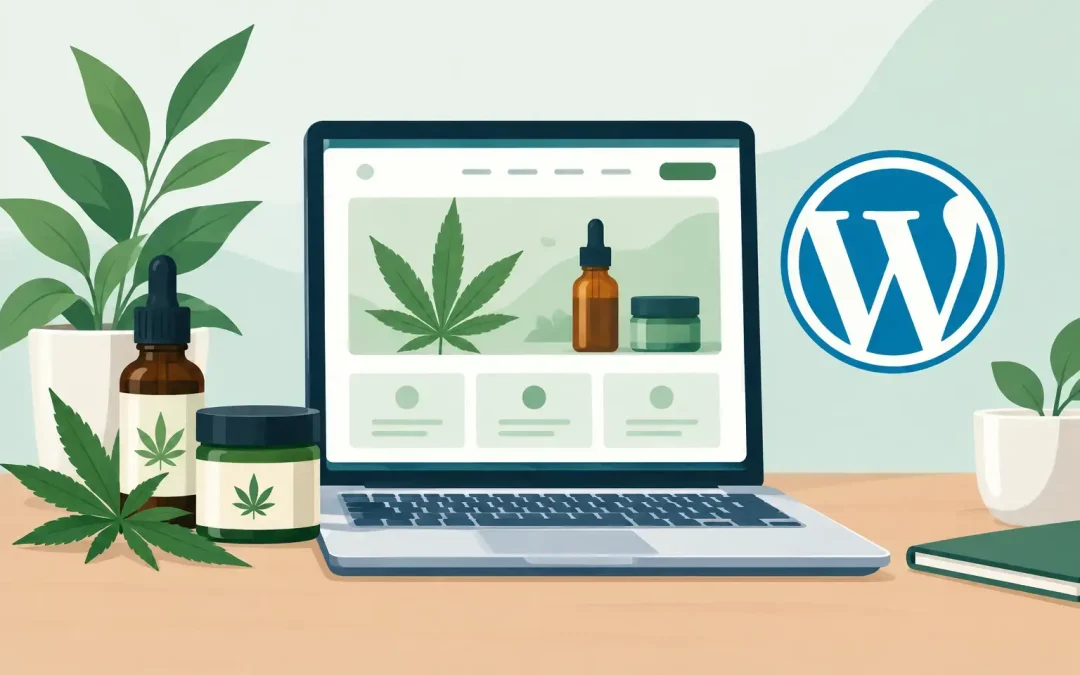
A CBD website can look polished, load quickly, and still run into trouble the moment its hosting company or payment provider reviews the business category. That is why the real answer to “can CBD sites use WordPress” is yes – but WordPress is only one part of a workable CBD web strategy.
WordPress is an excellent platform for CBD brands, retailers, manufacturers, educators, and affiliate publishers. It gives you ownership of your content, a familiar dashboard, thousands of design options, and the flexibility to build everything from a small informational site to a full WooCommerce store. The key is pairing it with vendors and policies that actually accept legal CBD businesses.
Can CBD Sites Use WordPress for Ecommerce?
Yes. WordPress and WooCommerce can support a CBD ecommerce website, including product pages, educational content, inventory management, subscriptions where permitted, customer accounts, coupons, shipping rules, and secure checkout integrations.
WooCommerce itself does not decide whether you can sell CBD. Your ability to operate depends on several outside factors: the products you sell, the laws that apply where you do business, the states where you ship, your payment processor’s policies, and whether your web host permits CBD-related websites. That distinction matters. A website can be technically functional while its merchant account is declined or its hosting account is suspended for violating a provider’s acceptable-use policy.
For hemp-derived CBD businesses, WordPress is often a better long-term choice than a closed website builder. You have more control over the store, data, product descriptions, SEO pages, and checkout tools. You are not locked into one ecommerce platform’s rules or forced to rebuild your site if its policies change. That flexibility does require more responsibility, especially around updates, backups, security, and compliance.
Start With a CBD-Friendly Web Host
The first question to ask a potential host is simple: Do you explicitly allow legal CBD websites and CBD ecommerce? Do not assume a large, mainstream provider is comfortable with the category just because it offers WordPress hosting.
Some general-purpose hosts use broad language around regulated products, controlled substances, supplements, or high-risk businesses. Their policies may be unclear, and support teams may not know how to handle a CBD store. That can leave business owners scrambling after a complaint, review, or sudden account restriction.
A cannabis-focused host understands that hemp-derived CBD, cannabis education, seed businesses, and medical marijuana organizations have specialized needs. Weed Hosts provides WordPress hosting for cannabis-related businesses with US-based server locations, cPanel access, automated backups, security-focused tools, and support from a team familiar with the industry.
Hosting acceptance is not a substitute for legal compliance. It simply means your site is not starting from a position of uncertainty with the company responsible for keeping it online. Before launching, review the host’s current acceptable-use policy and be honest about what you sell.
Payment Processing Is Usually the Hard Part
A WordPress site can publish CBD product pages without difficulty. Accepting card payments is where many new CBD sellers discover the limits of standard ecommerce setups.
Not every payment processor accepts CBD merchants, and those that do may accept only certain products, business models, states, or marketing claims. A processor may ask for lab reports, business formation documents, product labels, terms of service, refund policies, and proof that your products meet applicable requirements. Some will not support ingestibles, vape products, delta variants, recurring billing, or businesses selling into certain jurisdictions.
Avoid the temptation to categorize CBD products inaccurately to get through merchant onboarding. Misrepresenting products can lead to frozen funds, terminated accounts, and a painful disruption for customers. Use a payment provider that has confirmed in writing that it supports your specific CBD product category.
Before building your checkout around any gateway, ask about underwriting timelines, reserve requirements, transaction limits, chargeback procedures, recurring payments, and state restrictions. The lowest processing rate is not always the best deal if the provider cannot support your business as it grows.
Build Product Pages That Reduce Risk and Build Trust
CBD product pages must do more than sell. They should give customers and vendors a clear, accurate picture of what you offer.
Use precise product names, straightforward ingredient details, suggested use information where appropriate, net quantity, and clear shipping and return policies. If you offer third-party certificates of analysis, make them easy to find and keep them current. Customers want proof that the product they are considering matches its label.
Be careful with health and medical claims. Words such as “cure,” “treat,” “prevent,” and “diagnose” can create serious regulatory concerns when used to market CBD products. The same problem can appear in customer testimonials, blog posts, product reviews, social media embeds, and automated AI-generated descriptions. A disclaimer is not a magic fix for prohibited claims.
A safer content approach focuses on product facts, sourcing, formulation, flavor, usage format, manufacturing standards, and transparent testing. If you publish educational material, have it reviewed against current rules that apply to your products and market. CBD regulations and enforcement priorities can change, so a page written two years ago may need another look.
Choose WordPress Tools Carefully
WordPress gives CBD businesses plenty of options, but adding every available plugin is not a good strategy. Too many plugins can slow down the site, create conflicts, and introduce security risks. Start with the tools that directly improve operations.
For a typical CBD store, that means WooCommerce, a compatible payment gateway, a reliable shipping or tax solution, an SEO plugin, a security tool, a backup system, and an age-verification feature if it fits your business needs or legal obligations. Your theme should be mobile-friendly, maintained by its developer, and compatible with current versions of WordPress and WooCommerce.
Age gates deserve a practical review. They may be expected for some products or markets, but an age popup alone does not prove compliance. Make sure it does not interfere with accessibility, checkout, analytics, or search engine access. More importantly, confirm what your state and product category actually require.
Keep your core WordPress software, plugins, themes, and PHP version updated. Outdated extensions are a common source of hacked websites. Automated backups are equally valuable because they give you a restoration point if an update fails, malware appears, or a staff member changes something critical by mistake.
Make Speed, Security, and Support Part of the Plan
CBD shoppers often arrive from mobile search, social media, email campaigns, or a QR code on product packaging. If your store takes too long to load, they may leave before they read a single product benefit. Fast hosting, optimized images, sensible plugins, and a quality theme all contribute to a better customer experience.
Security protects more than your homepage. It protects customer confidence, store settings, order information, and the time you have invested in building search visibility. Use strong, unique passwords, limit administrator access, enable multi-factor authentication where available, and remove unused plugins and user accounts. An SSL certificate is essential for every ecommerce site, not an optional add-on.
Support matters when the problem is urgent. A broken checkout, database error, plugin conflict, or site migration is not something most business owners want to troubleshoot alone at midnight. Look for hosting support that can explain the issue clearly and help you restore service quickly, especially if you are not a technical user.
A Practical Launch Checklist for CBD WordPress Sites
Before announcing your site, test the complete customer journey. Visit the store on a phone, add products to the cart, calculate shipping, apply a coupon, create an account, and run test orders through your approved payment setup. Confirm that order emails arrive, taxes behave as expected, and your policies are visible before checkout.
You should also verify that your host accepts the business, your processor approves your actual product line, your product information is accurate, and your shipping rules match the locations you serve. Have a current backup before installing new plugins or making major design changes.
WordPress can give a CBD business the control and credibility it needs to grow, but it works best when the foundation is built for the category. Choose partners that understand your business, keep your site maintained, and let transparent product information do the hard work of earning customer trust.